

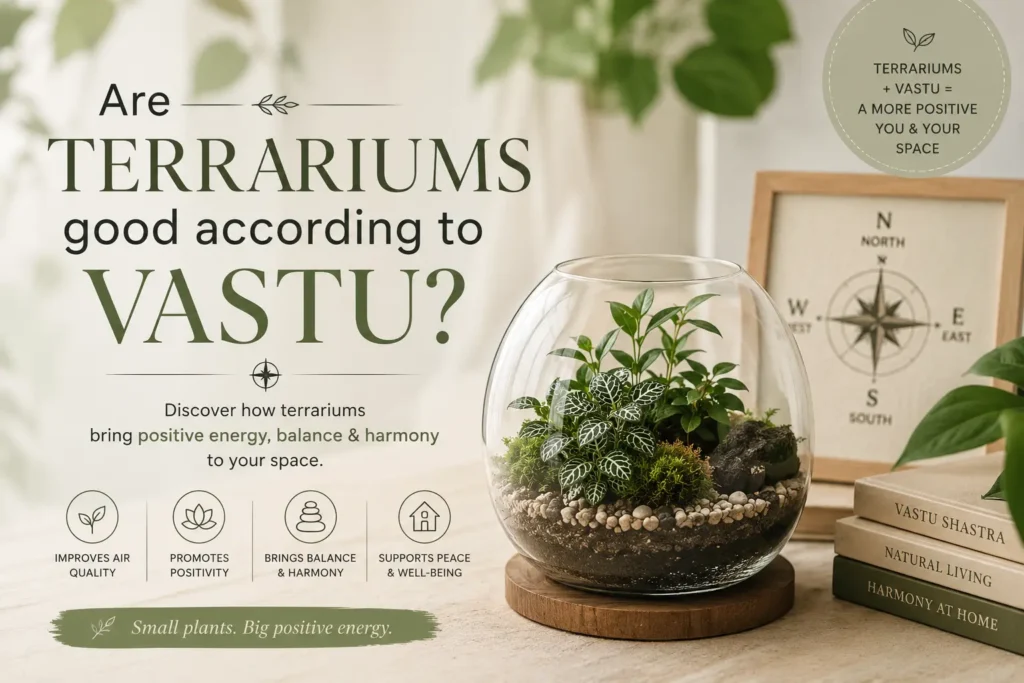
Are Terrariums Good According to Vastu? What You Need to Know Before Buying One
If you’ve been eyeing a glass terrarium for your living room or office desk but paused to wonder, “is a terrarium good according to Vastu for your home?” YOU’RE NOT ALONE!! As more homes across Delhi NCR move toward mini indoor gardens and low-maintenance greenery, this is one of the most common questions we hear before someone buys one.
The short answer: yes, terrariums are generally considered Vastu-friendly. They combine live plants, natural elements, and calm, balanced visuals, the exact things Vastu Shastra looks for in a good-luck plant. Here’s why that works, and what to actually check before you buy one.
Why Terrariums Work So Well With Vastu Principles
Live plants bring growing energy indoors
Vastu Shastra is built around the idea that a home should stay in harmony with natural forces, sunlight, air, and living energy, often referred to as prana. A terrarium isn’t a static showpiece; it’s a small, breathing ecosystem you can actually watch change week to week, a new leaf unfurling, moss thickening at the base, condensation fogging the glass on a humid Delhi morning. That visible, ongoing growth is what gives a terrarium an edge over anything artificial and it’s worth noting that live plants also do this in a very literal sense, since indoor plants have been studied for their role in helping improve air quality in enclosed spaces (NASA research on interior landscape plants).
It’s a mini forest, and that’s the point
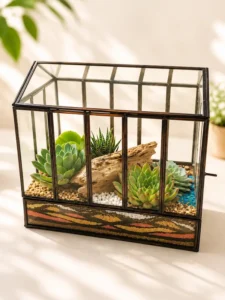
Vastu texts often talk about gardens and greenery around a home as sources of positive energy, not something most Delhi or Gurugram apartments have room for. A terrarium recreates that idea at desk scale: moss, small plants, sometimes a sliver of driftwood or stone, arranged like a tiny landscape behind glass. If you want to lean fully into this “forest-in-a-jar” feel, a larger glass house terrarium with layered moss and ferns goes furthest with it closer to an actual landscape than a single potted succulent.
Low maintenance keeps the energy consistent, not just the plant alive
This is the part most people underestimate. Because terrariums are semi-enclosed in glass, they trap humidity and generally need watering only once every week or two, plus indirect light. That’s a big deal for Vastu specifically: a plant that’s easy to keep healthy is a plant that’s far more likely to stay healthy, and it’s the ongoing, thriving state of the plant, not any single ritual that Vastu practice associates with sustained positive energy. A succulent terrarium that quietly holds up for months does more for a space than a high-maintenance plant that struggles half the year.
The glass form supports Vastu’s other big idea: Balance
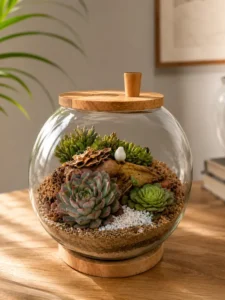
Vastu isn’t only about compass directions, it also values visual harmony and a clutter-free environment. A terrarium’s compact, self-contained form (layered sand or pebbles, one clean glass silhouette) sits naturally in this idea of a tidy, deliberate corner, rather than a scatter of pots and trailing vines across a windowsill. It’s genuinely one of the few decor pieces that works as a design statement and a Vastu-conscious choice at the same time which is part of why handmade terrariums with real succulents have become such a common housewarming and birthday gift across the city.
What to Check Before Buying a Terrarium for Vastu Reasons
With that context in mind, here’s the practical checklist:
- Live plants, not artificial ones. A terrarium’s Vastu value comes almost entirely from the fact that it’s alive. Dried or artificial arrangements skip this benefit entirely, and dried flowers in particular are usually discouraged in Vastu since they’re associated with stagnant, decaying energy rather than growth.
- Round or soft-leafed plants where possible. Succulents, moss, and ferns are the most traditional Vastu-favoured choices. Cacti can still work well in a terrarium, but if Vastu is your main reason for buying, it’s worth keeping thorny varieties to a minimum rather than the dominant plant in the arrangement.
- Glass over plastic. Glass is treated as the more natural, favourable material for a Vastu-conscious piece.
- A size that suits the room. Vastu favours open, breathable spaces, so it’s worth matching the terrarium to the room, a compact desktop or test-tube style for a smaller corner, and a larger glass house terrarium where there’s more open space to fill.
- Plant health, always. A wilting or neglected plant is considered worse than no plant at all in Vastu, since it symbolises draining rather than growing energy. This is actually where terrariums have an advantage: their semi-enclosed glass design makes them easier to keep thriving than an open pot, so check for firm, green leaves with no yellowing before you buy, and you’re unlikely to see much change for months.
Which Direction Is Best for a Terrarium in Vastu?
So overall the terrariums are good according to Vastu, now we move to their placement. Vastu guidance varies a little between consultants, but the commonly followed points are:
- East and north-east are generally considered the most favourable directions for plants and greenery, associated with growth and fresh starts.
- Near the entrance or in the living room, a terrarium is thought to welcome positive energy in as people enter.
- On an office desk, placed to the north-east or east of where you sit, a small terrarium is a popular choice for mental clarity and career growth. Compact desktop planters and test tube terrariums work well here since they don’t take up much surface area.
- South-west corners and bedrooms are usually where people keep greenery to a minimum altogether, in line with general Vastu guidance around sleeping areas — a small, well-placed terrarium is generally fine, but it’s not typically where you’d put the largest piece in your collection.
Why This Combination Works So Well for Gifting
For festival season, a housewarming (griha pravesh), or corporate gifting, a terrarium hits a sweet spot that’s hard to find elsewhere: it looks polished enough for a corporate client or a wedding guest, while still carrying the plant-based, positive-energy symbolism people associate with a thoughtful, Vastu-friendly gift. Unlike cut flowers, it doesn’t wilt within days, and unlike a standard showpiece, it doesn’t feel generic sitting on a shelf a year later.
For businesses sending Vastu-conscious, plant-based gifts at scale like client hampers, festive gifting, or employee welcome kits, Wild Roots Corporate Gifting handles bulk orders with custom branding and packaging.
Terrarium Delivery Across Delhi NCR
Wild Roots Gifting’s terrariums are handmade and shipped across Delhi, Noida, Gurugram, Faridabad, and Ghaziabad, alongside our physical store at Connaught Place, New Delhi, and our Dehradun operations. If you’d rather see a terrarium in person before deciding on placement especially for a housewarming gift where direction matters, you’re welcome to visit the store directly; details are on our store locator page.
Frequently Asked Questions
Is keeping a terrarium at home good according to Vastu? Yes. Terrariums contain live plants, which Vastu associates with positive, growing energy. As long as the plants stay healthy and the terrarium is placed in a favourable direction (commonly east or north-east), it’s considered a good addition to a home or office.
Which direction should a terrarium be placed in for good Vastu? Most Vastu practitioners recommend the east or north-east for plants and greenery, since these directions are linked to growth, health, and new beginnings. The south-west is generally avoided for delicate plant décor.
Is a money plant terrarium good for wealth according to Vastu? Money plant (Pothos) is one of the most widely recommended Vastu plants for prosperity, and it grows well in a semi-hydroponic terrarium. It’s typically kept in the south-east direction, which is traditionally associated with wealth in Vastu.
Do terrariums need a lot of maintenance to keep their Vastu benefits? No — this is one of their biggest advantages. Because they’re partially enclosed in glass, terrariums retain humidity and generally need watering only every one to two weeks, plus indirect light. Low maintenance means the plants are more likely to stay healthy long-term, which matters more for Vastu than any specific care ritual.
Can I gift a terrarium for a housewarming or Diwali according to Vastu beliefs? Yes, terrariums are a popular housewarming (griha pravesh) and festival gift precisely because they combine live greenery, positive symbolism, and long-lasting aesthetic appeal — unlike cut flowers, they don’t wilt within days.
Final Thoughts
A terrarium is one of the rare decor pieces that satisfies an interior designer and a Vastu consultant at the same time: live plants, natural materials, calm visual balance, and very little upkeep. Whether you’re buying one for your own home, gifting it for a housewarming, or sending a batch out for corporate gifting, a healthy, well-placed terrarium is a small, low-effort way to bring a bit of real, growing energy indoors.
Explore Wild Roots Gifting’s full range of handmade terrariums, delivered across Delhi, Noida, Gurugram, Faridabad, Ghaziabad, Dehradun, and pan-India.